At no time in film history has the comedy been more revered. The comedy cinematic masterpieces have never been so rich. You may not know the films, but you know the images. I'm going to focus on three comic stars of the silent era: Harold Lloyd, Buster Keaton, and Charles Chaplin.
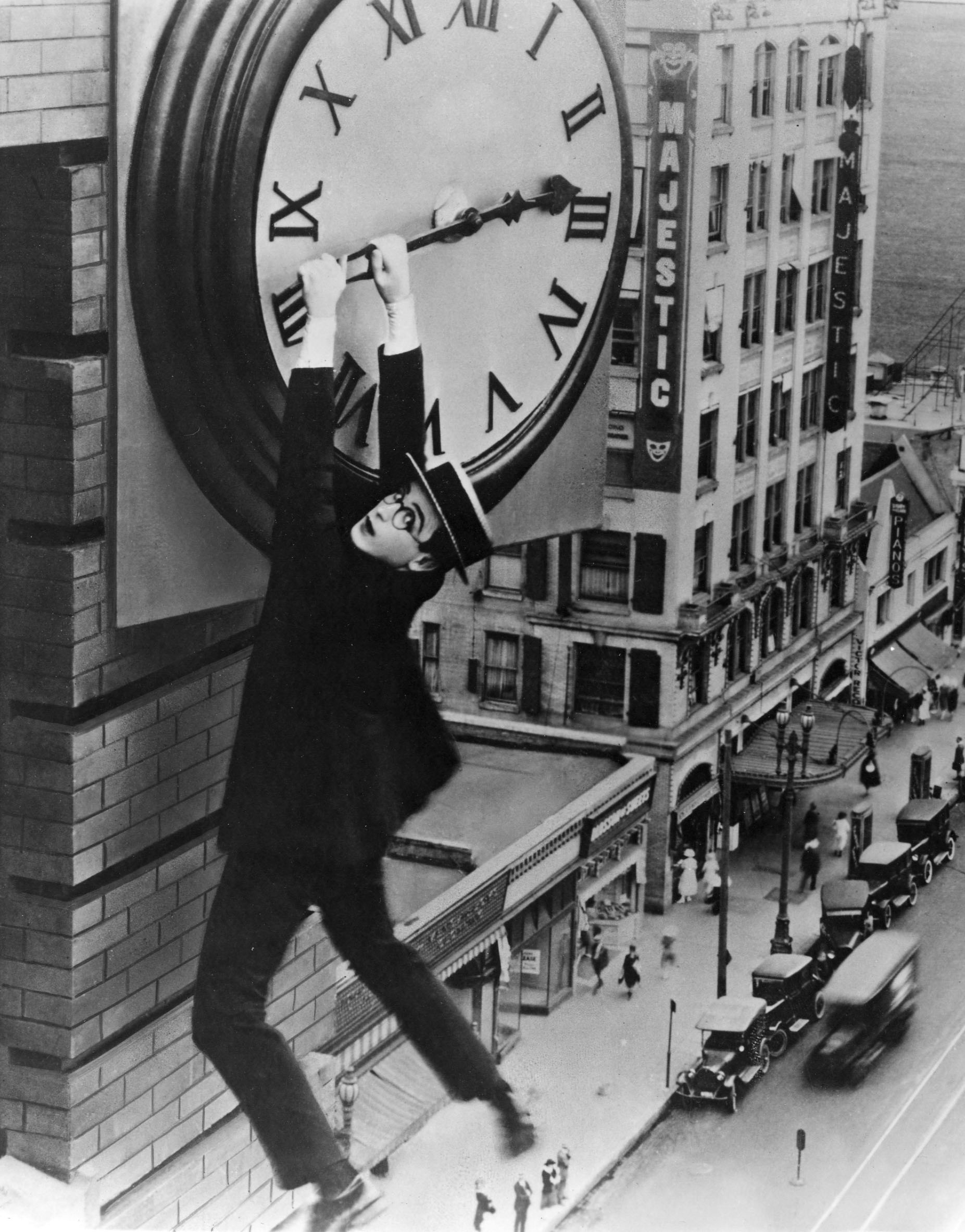
Harold Lloyd was more the straight man dropped into an out of place situation than Buster Keaton or Charlie Chaplin's Tramp. Harold Lloyd was also the most prolific of the bunch and did the greatest feats of daring of the group (see Safety Last!). Films of note are The Freshman and the aforementioned Safety Last!.

"[Keaton's] extraordinary period from 1920 to 1929, [when] he worked without interruption on a series of films that make him, arguably, the greatest actor-director in the history of the movies."
Roger Ebert
Joseph Frank Keaton was born October 4, 1895 to vaudeville performers. He would be known for his incredible stunts and deadpan face. When he was two he fell down a flight of stairs in a hotel. He got up and brushed it off as though nothing had happened. Among the witnesses to this was Harry Houdini who exclaimed "That's a real buster!"; from then on he'd be known as Buster Keaton. From the age of four Buster Keaton would preform with his family's act. Keaton started his career in film with another of silent film's comedy greats and tragic figures, Fatty Arbuckle. Buster Keaton made not only arguably the best comedy of the silent era, but arguably the greatest comedy of all time, The General. As Orson Welles put it "the greatest comedy ever made, the greatest Civil War film ever made, and perhaps the greatest film ever made.".
Ultimately, the film that today is seen as one of the great films (number 34 on Sights & Sounds 2012 poll, in the top ten in 1972 & 1982, and number 18 on AFI 100 greatest films among others), The General would be a critical and financial failure. He would be stripped of his independence and crushed in menial demeaning rolls by the studio. He would see a resurgence in his career at the end of his life as his films were rediscovered. Other films of note would be Sherlock Jr., Steamboat Jr. (from which perhaps his most famous stunt was preformed https://youtu.be/FN2SKWSOdGM), and The Cameraman.

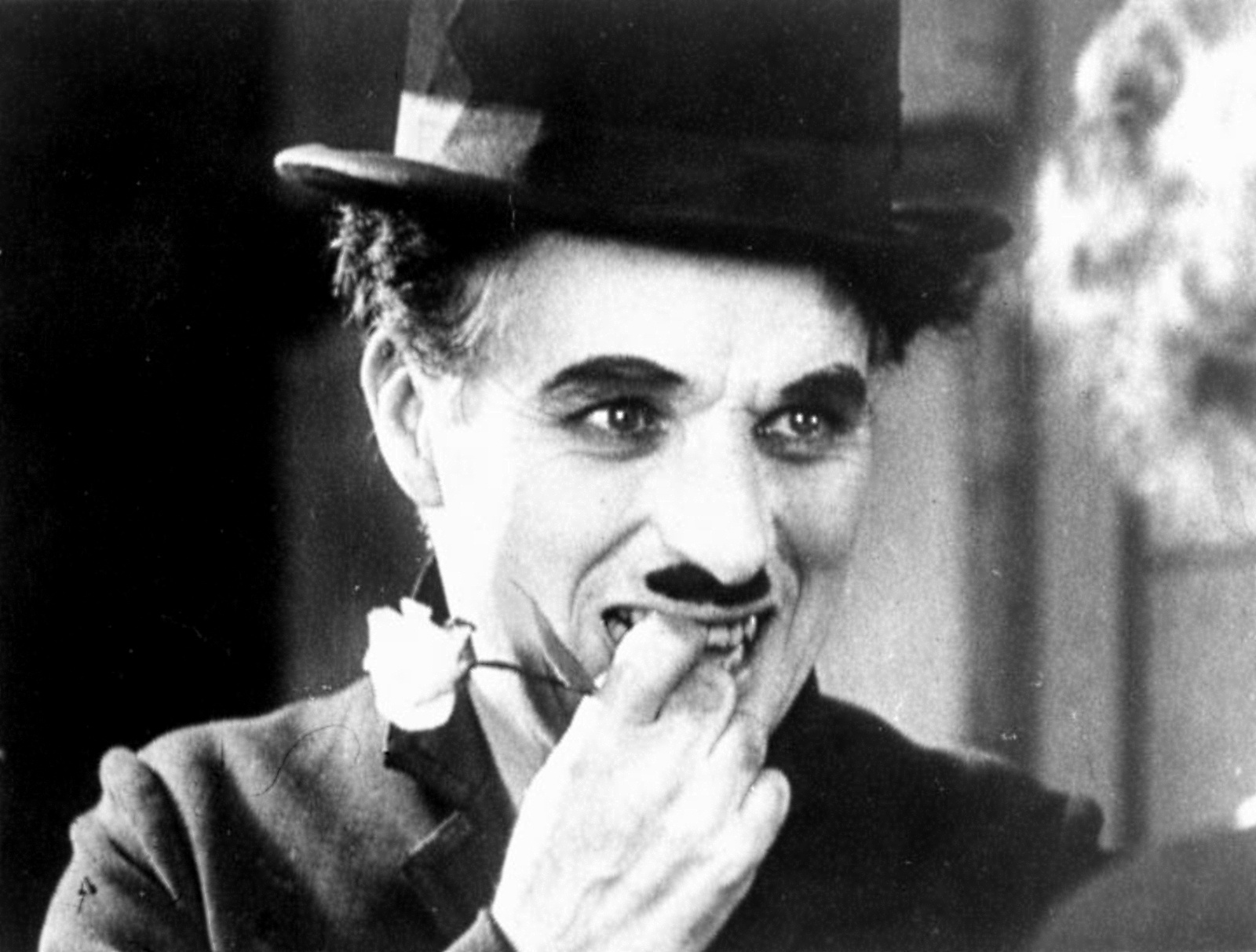
Sir Charles Spencer "Charlie" Chaplin was born to performer parents April 16, 1889. His father abandoned them after his mother became pregnant with his brother through an affair; his mother had to be committed most of her life due to mental problems, leaving him and his brother to more or less make their own way. They made a living as music hall performers which is how he made his way to America in 1908 with the Fred Karno company. In 1914 he was discovered by Mack Sennett and signed to his Keystone Studios, makers of the famous Keystone cop films. Chaplin quickly became disenchanted with Mack Sennett way of making films and wanted to do more fleshed out routines. Sennett hated Chaplin's way of doing things, but Chaplin's films where hugely popular. Ultimately Chaplin would break away from Keystone Studio and move to another, and another; before starting his own studio with D.W. Griffith, and his good friends Douglas Fairbanks and Mary Pickford. The studio, United Artist.
He wouldn't make his classic film, The Kid, for his new studio; or the next couple, but he would make the film he most wished to he known by, The Gold Rush. It would be a huge success. His next film, Chaplin would be given its own special Academy Award for "for writing, acting, directing and producing The Circus.". Chaplin would go on to make classics like City Lights, Modern Times, The Dictator and Limelight (with Buster Keaton in a cameo, the only time the two would share the big screen).

No comments:
Post a Comment