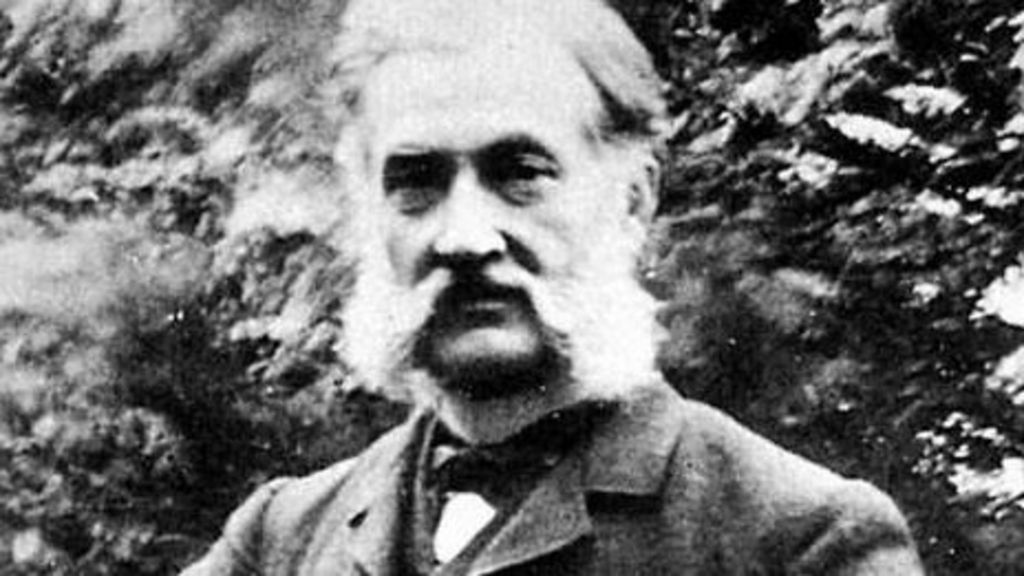
What you just saw was the first motion picture made from a single lens. The film was made by a man named Louis Le Prince. Louis Le Prince used Eastman paper film on a single lens, meaning he was using one camera unlike several like Eadweard Muybridge, to create the Roundhay Garden Scene and Traffic Crossing Leeds Bridge (http://youtu.be/wTlXaqG4VyE) in1888. Le Prince was secretive about his process and planned to display his films in New York in 1890. On September 16, 1890, Louis Le Prince with his camera boarded a train in Dijon, France headed to Paris. He would never be seen again. Some suspected he went into hiding to escape his debts. Some suspected that New Jersey gangster Thomas Edison put the hit on him. All we do know is it remains a mystery to this day.

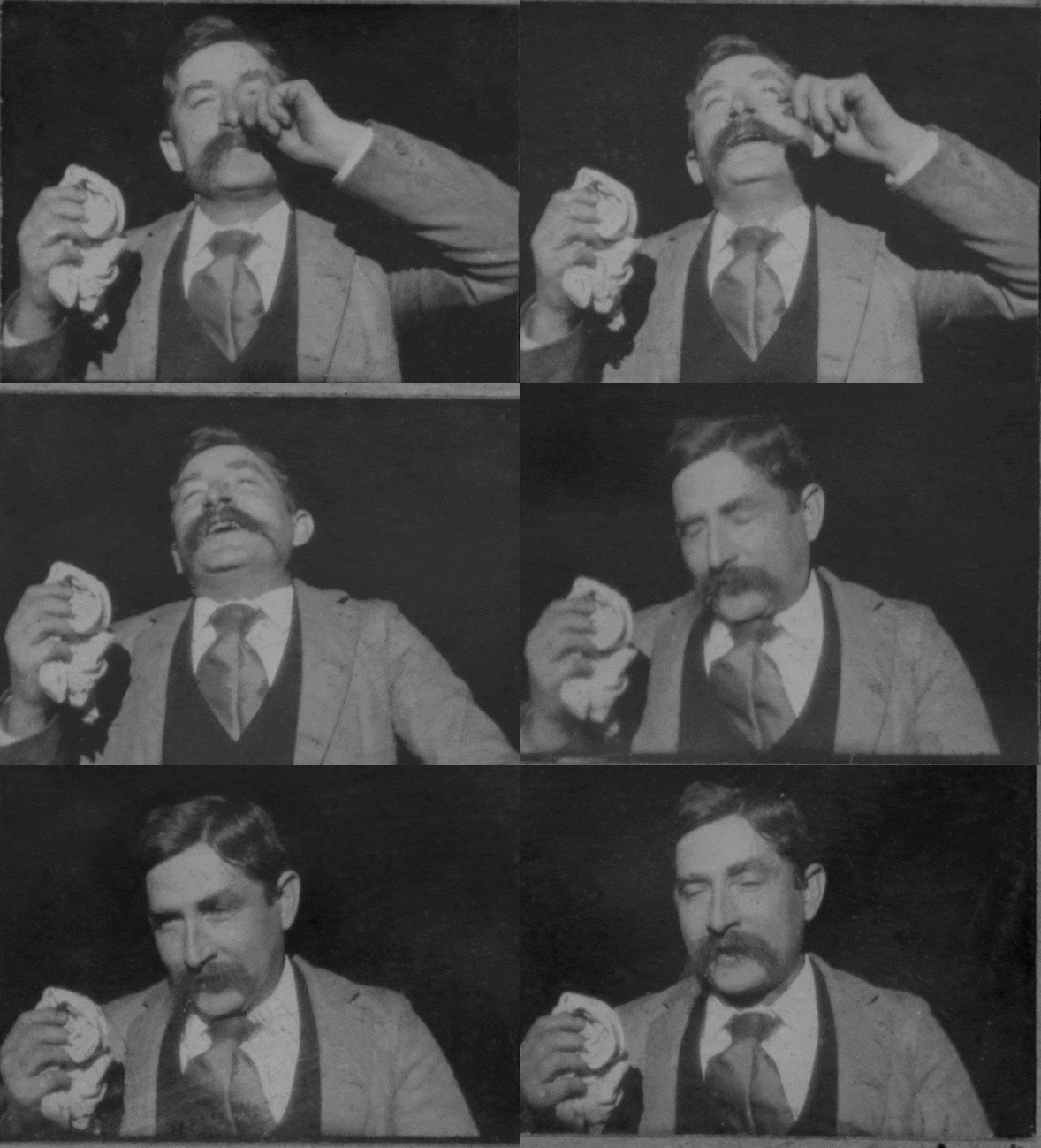
Meanwhile across the pond, Thomas Edison was working off of Muybridge's work and developed the Kinetoscope. The Kinetoscope was a device where a single view could look through a peephole and see a film in a loop. Thomas Edison would have built a production studio that was designed to follow the sun (Edison may have invented the light bulb, but his bulbs weren't up to the amount of light needed for the film exposers), it was called the Black Maria. The first film to be copyrighted in the U.S. would be Fred Ott's Sneeze http://upload.wikimedia.org/wikipedia/commons/8/8f/Fred_Ott_Sneeze_L.gif. It would take more than a single viewer device to bring film in the a real art form, it would take projection. It would take two French brothers.


Louis and Auguste Lumière, two French brothers who owned and operated the biggest manufacturer of photographic plates in Europe, were asked to make a cheaper alternative to Edison's kinetoscope. What they would make would make motion pictures available to a mass audience and provide the framework for film to grow into the mature art form it is today. Their camera would not only be able to shoot film it would be able to project film. December 28, 1895 in the Grand Café in Paris they would have the first public screening of ten short films. (https://youtu.be/4nj0vEO4Q6s). They would tour their film around the world, but ultimately they would give up on motion pictures saying "the cinema is an invention without any future". They would sell their camera to anyone who was interested. One of those interested parties would be someone who saw the magic cinema had to offer. He would be the cinemas first real auteur.


At a private showing of Lumière's film December 27, 1895 (the day before the Lumière brothers legendary showing public showing) was a French magician. The Lumières could not see a future in cinema. This magician would see the magic cinema had to offer. He would buy a camera. He would make the first real classics. His name Marie-Georges-Jean Méliès, known to the world as Georges Méliès. One day while filming a cart going down the street his camera jammed. When they got it restarted it was replaced by a new cart. What Méliès had invented was the jump cut. Méliès made the first horror film (https://youtu.be/OPmKaz3Quzo). The first science fiction a film you all know (http://youtu.be/koCmmuCRlgs). (It should be noted the film was not filmed in color. It was hand painted. This color version was thought lost and was only found recently). Méliès would make over 500 films (most lost). What he wouldn't do is change the perspective. All his shots would be from one angle (like watching a play). Even the shot in A Trip to the Moon where the moon comes closer and closer the camera the camera was not moved, the moon was moved.


Across the pond, Thomas Edison was having movies made left and right, and suing anyone who copied his equipment (down to the film loops) or films (all while stealing films like Méliès A Trip To the Moon). Edison didn't do much of the directing. One of his main guys was Edwin S. Porter. In 1903 he made Life of an American Fireman (https://youtu.be/p4C0gJ7BnLc). He did something crazy, he went from a shot of the interior of the house, showing the action inside, then he showed the action outside the house. When you think of what had been shown before or any plays that you might have seen you saw the perspective from one angle and one point of view. What seems so natural to us watching a movie was ground breaking then. Distributors didn't know if the customer would be able to follow the action.

That same year Porter would make the first film with a structure that we would see as a modern film. The Great Train Robbery https://youtu.be/r0oBQIWAfe4. It would employ a continuing story line, cuts to close ups, and cuts between scenes. Edwin S. Porter and Georges Méliès would start the language of film. They would give way to the man who would give it its grammar , D. W. Griffith.

No comments:
Post a Comment